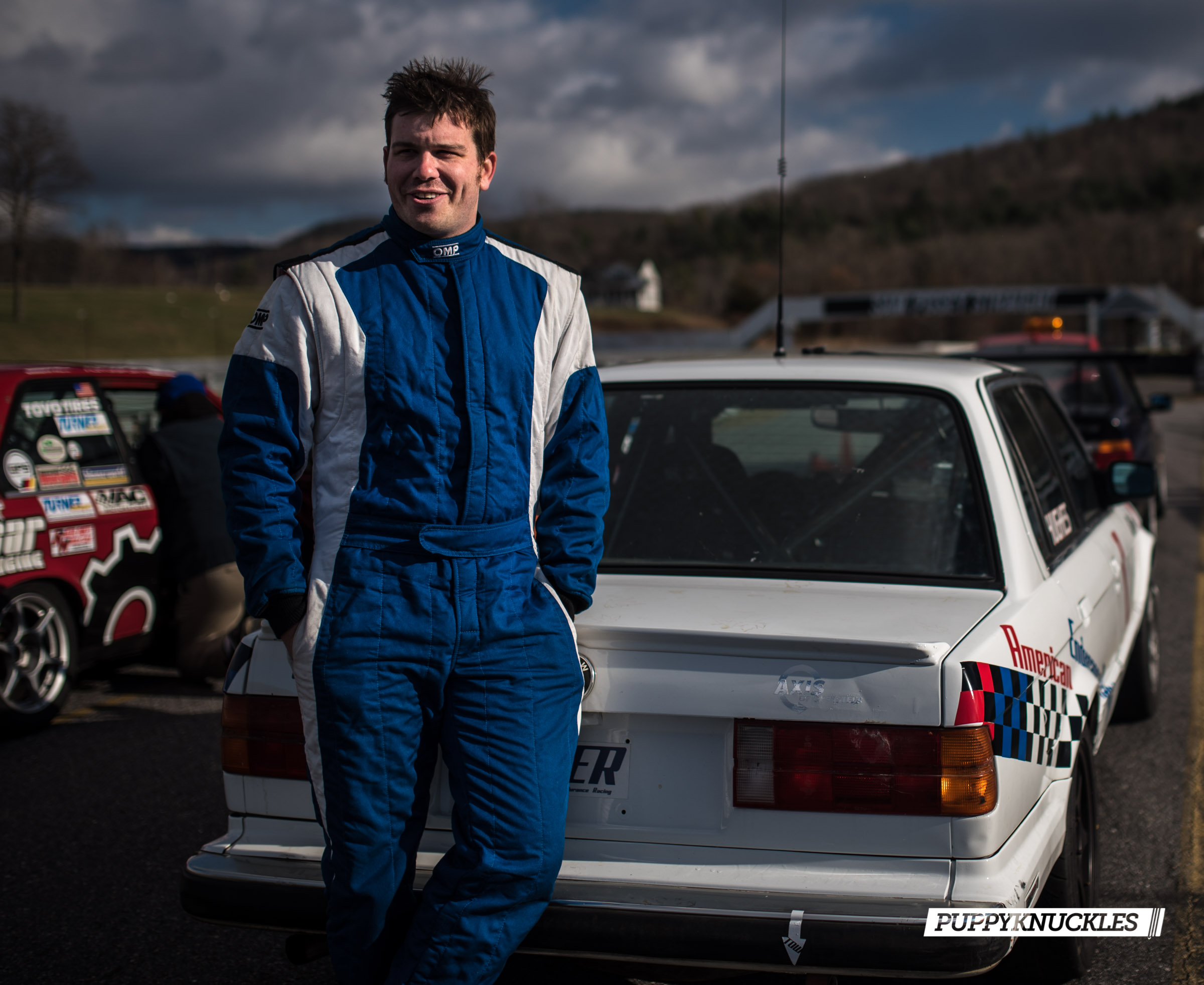
I’m Coming Back to AER. Here’s Why
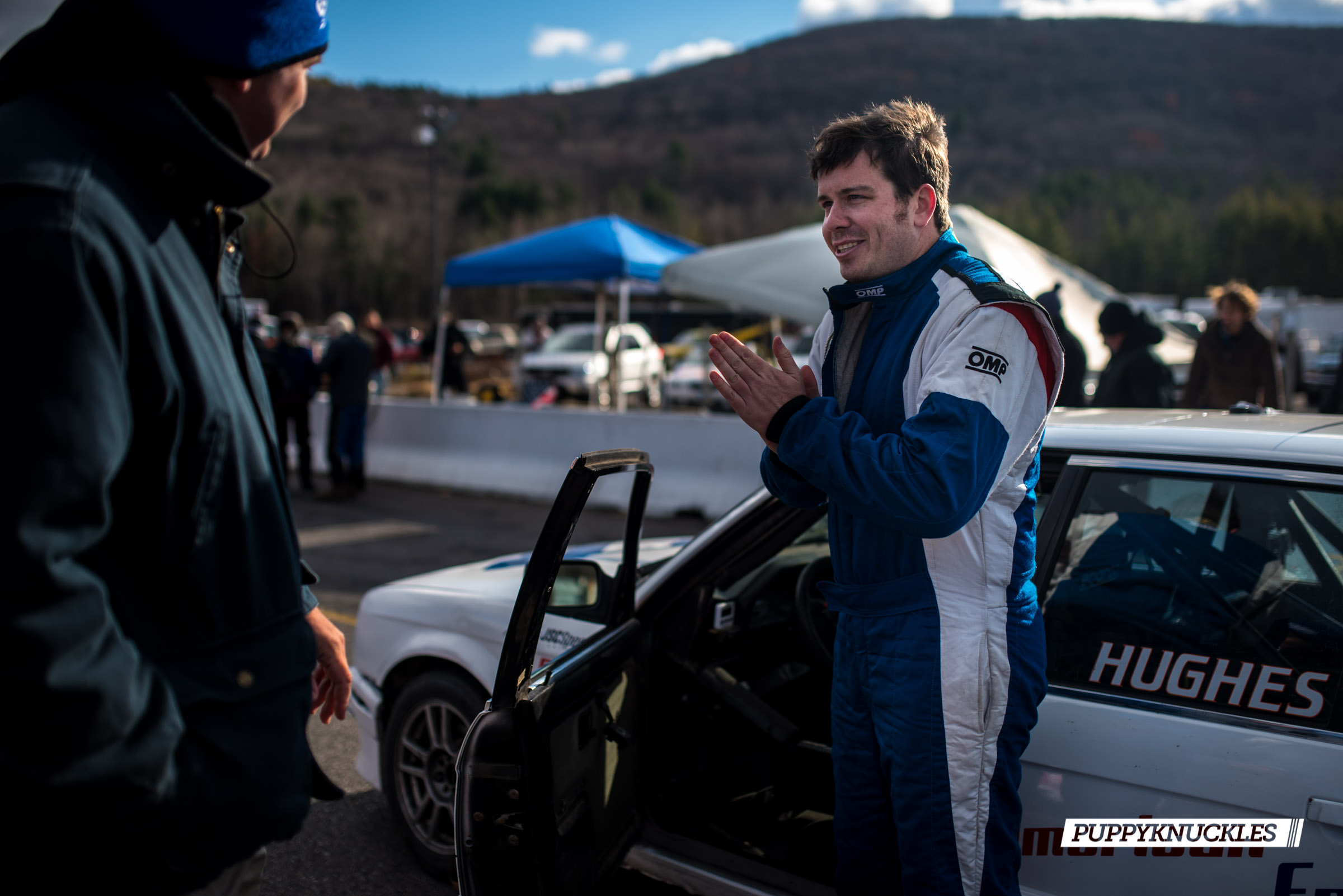
Life, work, and kids got in the way, but now it’s time to get back to amateur racing.
The inaugural AER weekend at New Jersey Motorsports Park in 2014 was my first-ever race in a car. I spent years karting when I was a kid and, when I realized I wasn’t good enough for IndyCar, parlayed that into a career as an auto journalist. However, my time on track in a car before that race was distinctly not wheel-to-wheel. Track testing new cars is a blast, don’t get me wrong, but I longed to get back to competition. Besides, the folks at Porsche don’t look kindly on divebombing someone into the Corkscrew on a press event.
That first race weekend in a Spec E30 brought all my racing memories flooding back. It was an entire career in a weekend, and it ended with an overall win. I was hooked. I sporadically came back for a few years when time allowed. Then kids, work, and life got in the way. We’ve all been there. I’ve been out of the paddock for a while.
I miss it. I’ve been thinking about coming back, and I’m going to this year. If you’ve been away, you should come back too. Here’s why.
I still remember how nervous I was that first race weekend. Sure, I had plenty of racing experience, but a car is much different than a kart. Also, and this is embarrassing, but going into that weekend I’d never heel/toe downshifted before. I may have projected that I knew what I was doing when John got me to sign up, but I was very worried that bluster would come and slap me in the face. Or, worse, ruin someone else’s car.
The good thing is that I was in a Spec E30, which is about as forgiving as a race car can be. I figured it out quickly and even got people to shrug off the stereotype that auto journalists can’t drive. I spent as much time as I could on the full Friday practice day on track, getting my racing brain back in shape after years out of the environment.
I don’t think I would’ve been able to do that in any other series, to be honest. Getting the rust off was real, but getting used to a car I’ve never driven and a track I’ve never seen takes time. I’m quick (but not wildly so) once I know the track, but learning takes me a little longer. AER gave us a full day of practice. Even split with the other drivers in the car, I had plenty of time to remember how to race. It felt good.
All that practice didn’t only get me up to speed, it set the team up for a fantastic race weekend. We were a rag-tag group made up of amateur racers, auto journos, and—for reasons that still aren’t clear to me all these years later—pro-driver Randy Pobst. We had a killer weekend.
Now, the field was smaller, the competition perhaps less intense, and the cars not as quick as the field is now, but we got the overall win for the weekend. It was amazing. I was addicted. Again. I decided to run the rest of the season.
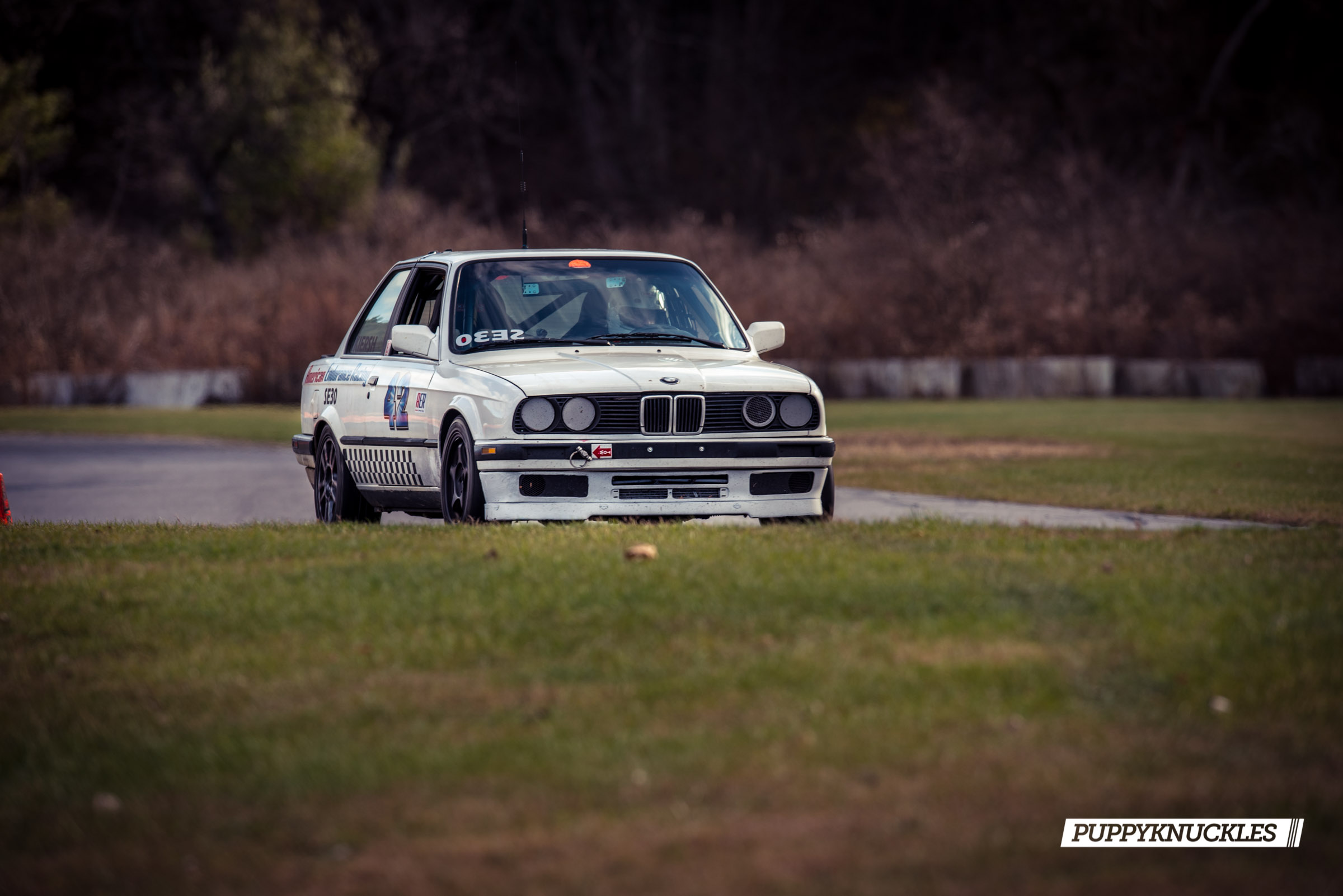
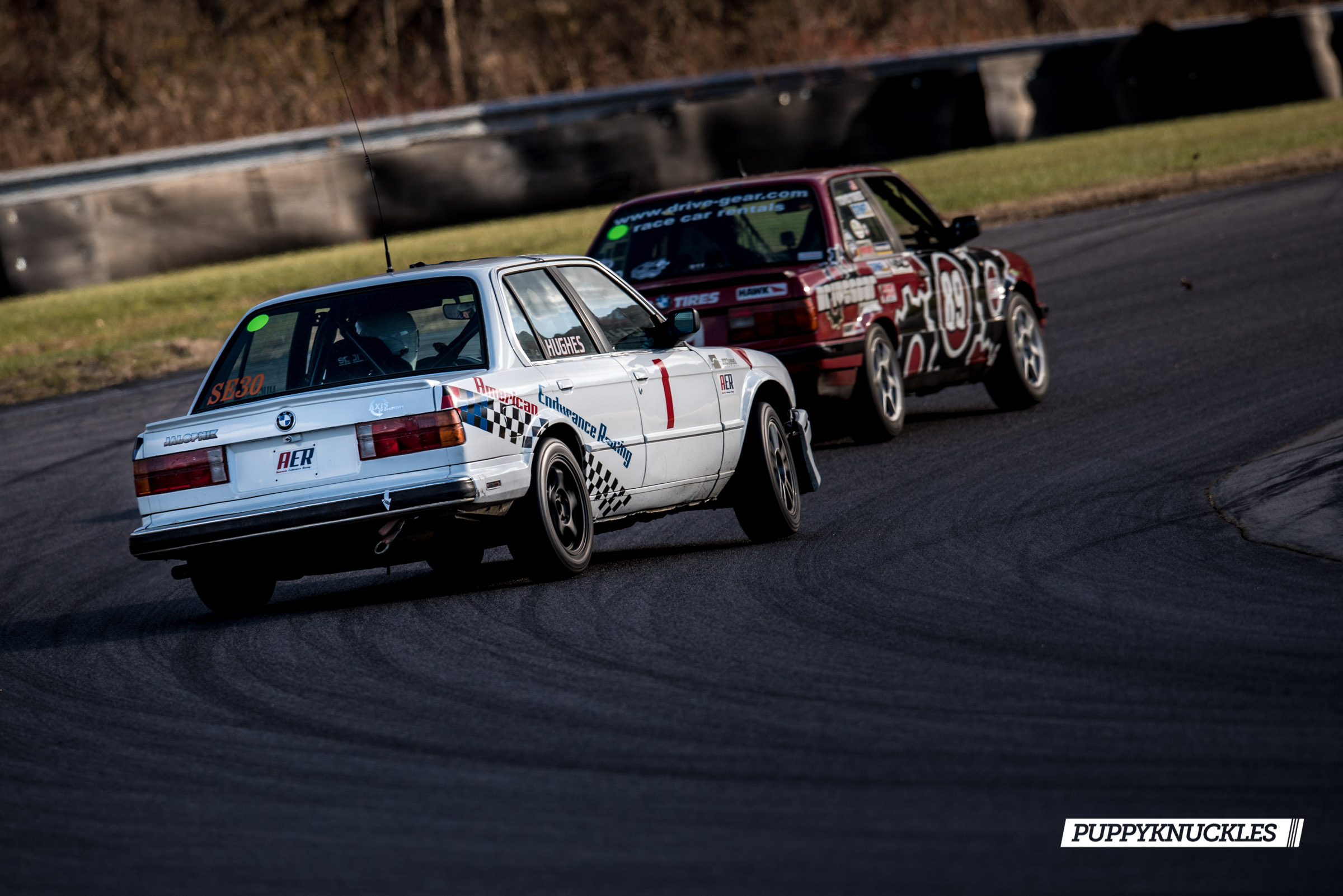
The sheer amount of track time is what made me interested, but really it was the other tracks on the schedule that made me want to run the rest of the season. That particular season featured visits to Watkins Glen and Lime Rock Park, two bucket list places. I’d never been to The Glen, but it hosted the only NASCAR race I looked forward to every year. Lime Rock Park was a track I’d been to countless times to watch historic racing, but I’d never gotten close to the actual track surface.
My first laps on those tracks were spent in awe of the facilities. I just never thought I’d get to race there. I simply figured you had to be a pro to get out at The Glen or had to own a vintage car to get on track at Lime Rock. Turns out that wasn’t true.
AER gave me other chances to run at tracks I’ve revered over the years, like a run at Road Atlanta. That is easily the most intimidating place I’ve ever raced; the first turn alone requires more commitment than most relationships. Then there’s Mid-Ohio, which became my favorite track in the country after my first race there. It’s such an impressive place, with a little bit of every great track combined to become an instant legend.
This season, AER is going back to Watkins Glen in early May, and I’m excited to race there again. But there are a few other tracks on the schedule that I’ve never gotten a chance to race. VIR has always been on my list, as has Summit Point, but the one that I keep thinking about is Road America in August. Prime time at one of the best tracks in the country, that’s going to be a blast. I only recently visited that track for the first time for a different event, and the scale of the facility is just incredible.
If I’m able to make it to that race, I’ll just need to figure out a faster car than a Spec E30. I don’t want to spend two minutes on the front straight.
I really kept coming back for the people. That first weekend had a cookout and a burnout contest after the first day, one where the Aston Martin I borrowed was filmed going up against a Mercedes SL. I cannot confirm or deny that Aston Martin sent me an angrygram after that video came out.
Everyone was just so kind and welcoming. I wanted to be part of the community.
Turns out, that wasn’t a one-off experience. Every single time I’ve been to an AER race, I’ve reconnected with old friends and made new ones, either in the pits, over beers after the race, or chatting about the stint we just had. Now, that’s not a rare thing at a track, since it isn’t often that we get to indulge a hobby like this; it’s not the sort of thing you can talk to your neighbor about and expect him to remain interested in every nuance. But at a track, you can be that nerd and talk about the minutia of a single corner or if Hakkinen was better than Schumacher.
AER just did a great job of bringing together a solid group of folks who are there to race and have fun, not to get bogged down in the minutia of rulesets. Classing isn’t set by giving penalties for nonsense mods, but instead takes driver quality, the car, and, most importantly, analyzes lap time data to make sure that the car is classed correctly. That means there’s no advantage to sandbagging on the practice day to then obliterate the field, and one tremendous lap by your fastest driver won’t put the car into a class it shouldn’t be in. There’s nothing secretive and nothing being obscured. I think that’s a big part of what makes it a joy.
And now, that track family is missing from my life now. I want it back.
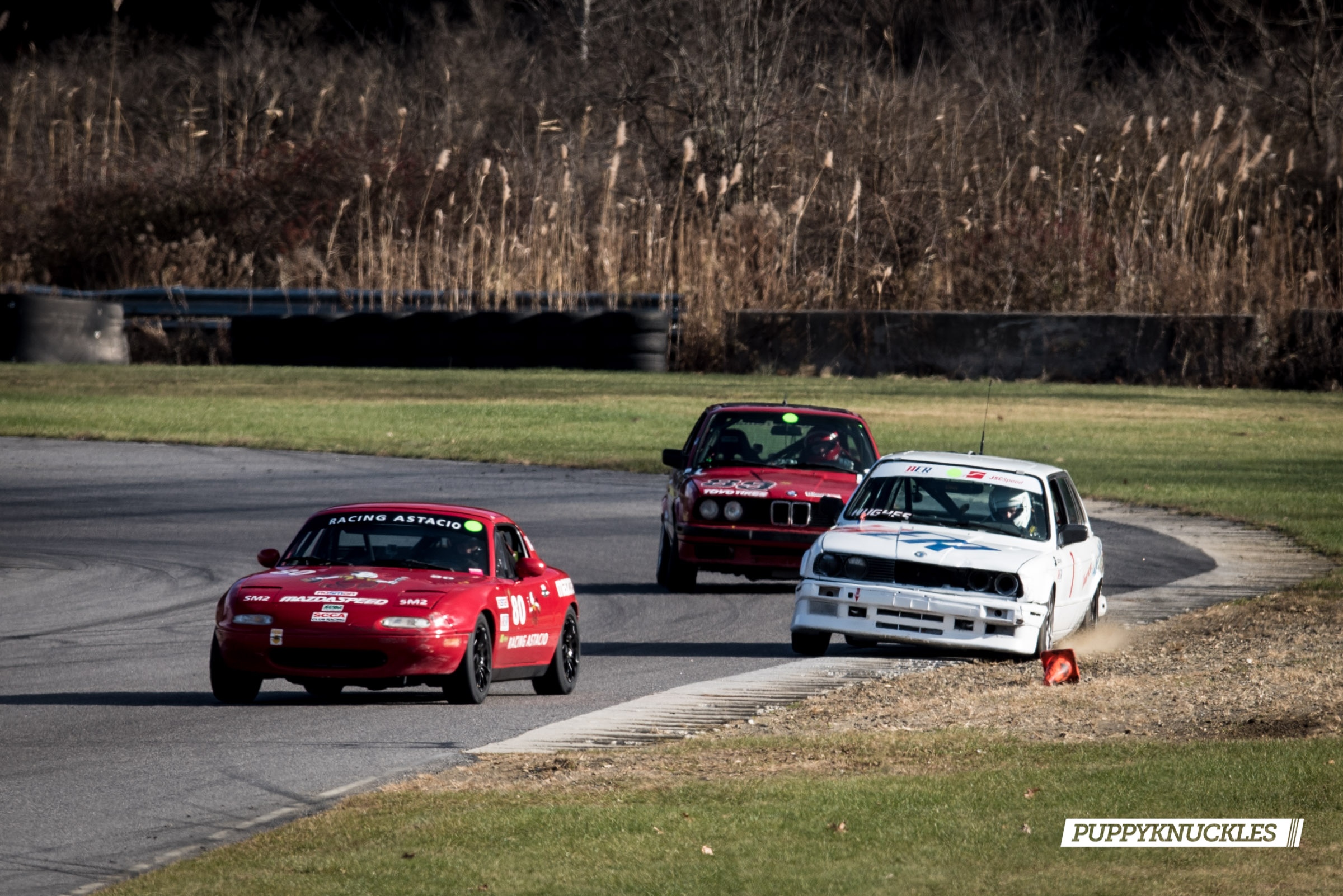
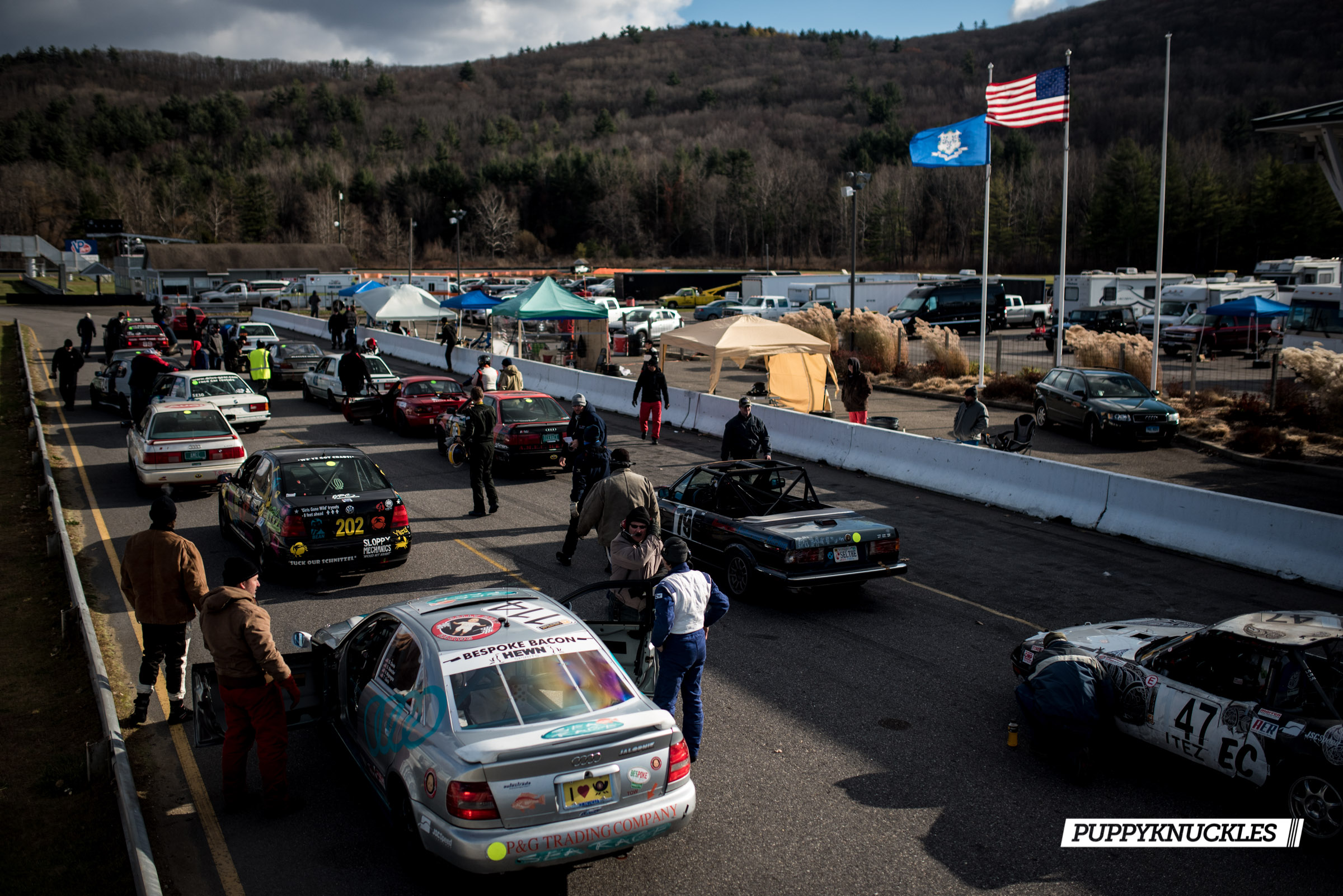
In the years—and it’s been years—since I’ve run AER, it seems much has remained the same. The fields may have gotten bigger and the cars may have gotten faster, but friends on the ground have told me the racing is still just as clean and safe, the paddock just as friendly, the tracks are still bucket lists, and there’s still an obscene amount of track time for a race weekend. Put it all together and you’re looking at about 24 hours of time across three days. Pretty fantastic.
And while I haven’t stopped racing entirely, I’ve been lucky to get one weekend per year since the pandemic where I’m on track, wheel-to-wheel. Typically, that’s been at the Monterey Motorsports Reunion, a weekend of historic races held at Laguna Seca in August. While it’s an incredible experience to drive a car in an event like that, the Reunion falls more towards an exhibition than a real race. These cars are pieces of history that aren’t worth risking, the classing is broad, with cars that would never race against each other competing, and all of these vintage cars are in various states of tune, many detuned to preserve them, so there is no true idea of how quick they actually are.
If anything, that experience enhances the appeal of AER. There’s something special about vintage racing, but there’s something so pure and wonderful about real club racing like this. People out there not for prestige or to showcase their historic car, but on track for the love of adrenaline, the charged feeling of taking the start, the anxiety of strategy changes, and the relief of taking the checkered flag.
Now, my kids are a little older, life is a little less chaotic, and racing can move up the list of priorities in my life. I can’t wait to get back on track at The Glen, and I hope I’ll see you there.